According to SPER Market Research, the Global 3D printed prosthetics market is estimated to reach USD 3.26 billion by 2034 with a CAGR 7.95%.
Introduction and Overview
The report includes an in-depth analysis of the Global 3D printed prosthetics market, including market size and trends, product mix, Applications, and supplier analysis.
The global 3D Printed Prosthetics Market was valued at around USD 1.51 billion in 2024 and is expected to grow at a CAGR of over 7.95% from 2025 to 2034. The market is witnessing strong growth due to the increasing adoption of additive manufacturing technologies in the healthcare sector. 3D printing enables the production of highly customized, lightweight, and cost-effective prosthetic solutions, improving patient comfort and functionality. Rising incidences of limb loss caused by diabetes, trauma, and vascular diseases are further driving demand. Advancements in 3D printing materials and design software, along with growing support from governments, non-profit organizations, and humanitarian initiatives, are accelerating market adoption globally.
By Type:
The prosthetic sockets segment dominates the 3D printed prosthetics market, as sockets require the highest level of personalization to ensure proper fit, comfort, and mobility for users. 3D printing enables precise anatomical customization, reduced production time, and iterative design adjustments, which are difficult to achieve through conventional manufacturing methods. Sockets serve as the critical interface between the residual limb and the prosthetic device, making comfort and accuracy essential for patient satisfaction. Increasing demand for patient-specific solutions, rising adoption of digital scanning technologies, and growing awareness among clinicians are further driving the dominance of the sockets segment in the overall market.
By Material:
Polypropylene and polyethylene materials dominate the market due to their lightweight properties, durability, flexibility, and cost-effectiveness. These materials are highly compatible with common 3D printing techniques, enabling efficient production of strong and comfortable prosthetic components. Their ability to withstand repeated stress while maintaining structural integrity makes them suitable for long-term prosthetic use. Additionally, polypropylene and polyethylene offer ease of modification and recyclability, supporting sustainable manufacturing practices. Growing advancements in polymer formulations and increasing use of biocompatible materials are further strengthening the adoption of these plastics in the 3D printed prosthetics market.
By End Use:
Hospitals and prosthetic clinics represent the dominant end-use segment in the 3D printed prosthetics market, driven by access to advanced healthcare infrastructure and specialized clinical expertise. These settings provide comprehensive prosthetic services, including patient assessment, digital limb scanning, device fitting, and post-fitting rehabilitation. The increasing preference for personalized prosthetic solutions and growing patient inflow for amputee care support segment growth. Moreover, collaborations between hospitals, clinics, and 3D printing technology providers are accelerating adoption. Availability of skilled professionals and integration of digital workflows further reinforce the leadership of hospitals and prosthetic clinics.
Regional Insights:
The 3D printed prosthetics market is analyzed across key regions including North America, Europe, Asia Pacific, Latin America, and the Middle East & Africa. North America, led by the U.S. and Canada, holds a significant market share due to advanced healthcare infrastructure and early adoption of 3D printing technologies. Europe follows with strong contributions from Germany, the UK, France, Italy, Spain, and the Netherlands, supported by favorable reimbursement policies and technological innovation. Asia Pacific is witnessing rapid growth across Japan, China, India, Australia, and South Korea due to rising healthcare investments and increasing amputee populations. Latin America and the Middle East & Africa are emerging markets, driven by improving healthcare access and supportive initiatives.
Market Competitive Landscape:
The 3D printed prosthetics market is highly consolidated. Some of the market key players are Bionic Prosthetics and Orthotics, Create Prosthetics, Eqwal Group (Steeper Group), Exone, Limbitless Solutions, Materialise, Mercuris, Motorica, Open Bionics, Prothea, Protosthetics, Stratasys, UNYQ, WillowWood, YouBionic
Recent Developments:
• In April 2025, Open Bionics, a robotics firm positioned in the UK, blazoned the launch of its new Hero RGD (Rugged) and Hero PRO bionic hands. Leakproof and completely wireless, these bionic arms are the only one of their kind in the world and are also equipped with two times faster functions than leading bionic hands.
• In March 2023, Eqwal Group, a global case service provider, blazoned to acquire Steeper Group, company with moxie in offering orthotic and prosthetic case care. Eqwal Group agreed to acquire 100 of the shares in Steeper Group.
• In April 2022, Protosthetics launched Galileo, which it claimed was the field’s first full- service, in- house 3D printing program acclimatized for orthotics and prosthetics (O&P) practices. The draw- and- play system was designed to help conventions overcome crucial walls to espousing 3D printing. This launch deposited the company to strengthen its presence in the request by enabling wider relinquishment of its technology and streamlining clinical workflows.
Scope of the report:
Report Metric Details
Market size available for the years 2021-2034
Base year considered 2024
Forecast Period 2025-2034
Segments Covered By Type, By Material, By End Use
Regions Covered North America, Latin America, Asia-Pacific,
Europe, and Middle East & Africa
Companies Covered Bionic Prosthetics and Orthotics, Create Prosthetics, Eqwal Group (Steeper Group), Exone, Limbitless Solutions, Materialise, Mercuris, Motorica, Open Bionics, Prothea, Protosthetics, Stratasys, UNYQ, WillowWood, YouBionic
Key Topics Covered in the Report
• Global 3D Printed Prosthetics Market Size (FY’2021-FY’2034)
• Overview of Global 3D Printed Prosthetics Market
• Segmentation of Global 3D Printed Prosthetics Market by Type (Limbs, Sockets, Joints, other types)
• Segmentation of Global 3D Printed Prosthetics Market by Material (Polypropylene, Polyethylene, Acrylics, Polyurethane)
• Segmentation of Global 3D Printed Prosthetics Market by End Use (Hospitals, Rehabilitation centers, Prosthetic clinics, other end use)
• Statistical Snap of Global 3D Printed Prosthetics Market
• Expansion Analysis of Global 3D Printed Prosthetics Market
• Problems and Obstacles in Global 3D Printed Prosthetics Market
• Competitive Landscape in the Global 3D Printed Prosthetics Market
• Details on Current Investment in Global 3D Printed Prosthetics Market
• Competitive Analysis of Global 3D Printed Prosthetics Market
• Prominent Players in the Global 3D Printed Prosthetics Market
• SWOT Analysis of Global 3D Printed Prosthetics Market
• Global 3D Printed Prosthetics Market Future Outlook and Projections (FY’2025-FY’2034)
• Recommendations from Analyst
Global 3D Printed Prosthetics Market Size-By Type, By Material, By End Use -Regional Outlook, Competitive Strategies and Segment Forecast to 2034
1. Introduction
1.1. Scope of the report
1.2. Market segment analysis
2. Research Methodology
2.1. Research data source
2.1.1. Secondary Data
2.1.2. Primary Data
2.1.3. SPER’s internal database
2.1.4. Premium insight from KOL’s
2.2. Market size estimation
2.2.1. Top-down and Bottom-up approach
2.3. Data triangulation
3. Executive Summary
4. Market Dynamics
4.1. Driver, Restraint, Opportunity and Challenges analysis
4.1.1. Drivers
4.1.2. Restraints
4.1.3. Opportunities
4.1.4. Challenges
5. Market variable and outlook
5.1. SWOT Analysis
5.1.1. Strengths
5.1.2. Weaknesses
5.1.3. Opportunities
5.1.4. Threats
5.2. PESTEL Analysis
5.2.1. Political Landscape
5.2.2. Economic Landscape
5.2.3. Social Landscape
5.2.4. Technological Landscape
5.2.5. Environmental Landscape
5.2.6. Legal Landscape
5.3. PORTER’s Five Forces
5.3.1. Bargaining power of suppliers
5.3.2. Bargaining power of buyers
5.3.3. Threat of Substitute
5.3.4. Threat of new entrant
5.3.5. Competitive rivalry
5.4. Heat Map Analysis
6. Competitive Landscape
6.1. Global 3D Printed Prosthetics Market Manufacturing Base Distribution, Sales Area, Product Type
6.2. Mergers & Acquisitions, Partnerships, Product Launch, and Collaboration in Global 3D Printed Prosthetics Market
7. Global 3D Printed Prosthetics Market, By Type, (USD Million) 2021-2034
7.1. Limbs
7.2. Sockets
7.3. Joints
7.4. Other types
8. Global 3D Printed Prosthetics Market, By Material, (USD Million) 2021-2034
8.1. Polypropylene
8.2. Polyethylene
8.3. Acrylics
8.4. Polyurethane
9. Global 3D Printed Prosthetics Market, By End Use, (USD Million) 2021-2034
9.1. Hospitals
9.2. Rehabilitation centers
9.3. Prosthetic clinics
9.4. Other end use
10. Global 3D Printed Prosthetics Market, (USD Million) 2021-2034
10.1. Global 3D Printed Prosthetics Market Size and Market Share
11. Global 3D Printed Prosthetics Market, By Region, 2021-2034 (USD Million)
11.1. Asia-Pacific
11.1.1. Australia
11.1.2. China
11.1.3. India
11.1.4. Japan
11.1.5. South Korea
11.1.6. Rest of Asia-Pacific
11.2. Europe
11.2.1. France
11.2.2. Germany
11.2.3. Italy
11.2.4. Spain
11.2.5. United Kingdom
11.2.6. Rest of Europe
11.3. Middle East and Africa
11.3.1. Kingdom of Saudi Arabia
11.3.2. United Arab Emirates
11.3.3. Qatar
11.3.4. South Africa
11.3.5. Egypt
11.3.6. Morocco
11.3.7. Nigeria
11.3.8. Rest of Middle-East and Africa
11.4. North America
11.4.1. Canada
11.4.2. Mexico
11.4.3. United States
11.5. Latin America
11.5.1. Argentina
11.5.2. Brazil
11.5.3. Rest of Latin America
12. Company Profile
12.1. Bionic Prosthetics and Orthotics
12.1.1. Company details
12.1.2. Financial outlook
12.1.3. Product summary
12.1.4. Recent developments
12.2. Create Prosthetics
12.2.1. Company details
12.2.2. Financial outlook
12.2.3. Product summary
12.2.4. Recent developments
12.3. Eqwal Group (Steeper Group)
12.3.1. Company details
12.3.2. Financial outlook
12.3.3. Product summary
12.3.4. Recent developments
12.4. Exone
12.4.1. Company details
12.4.2. Financial outlook
12.4.3. Product summary
12.4.4. Recent developments
12.5. Limbitless Solutions
12.5.1. Company details
12.5.2. Financial outlook
12.5.3. Product summary
12.5.4. Recent developments
12.6. Materialise
12.6.1. Company details
12.6.2. Financial outlook
12.6.3. Product summary
12.6.4. Recent developments
12.7. Mercuris
12.7.1. Company details
12.7.2. Financial outlook
12.7.3. Product summary
12.7.4. Recent developments
12.8. Motorica
12.8.1. Company details
12.8.2. Financial outlook
12.8.3. Product summary
12.8.4. Recent developments
12.9. Open Bionics
12.9.1. Company details
12.9.2. Financial outlook
12.9.3. Product summary
12.9.4. Recent developments
12.10. Prothea
12.10.1. Company details
12.10.2. Financial outlook
12.10.3. Product summary
12.10.4. Recent developments
12.11. Protosthetics
12.11.1. Company details
12.11.2. Financial outlook
12.11.3. Product summary
12.11.4. Recent developments
12.12. Stratasys
12.12.1. Company details
12.12.2. Financial outlook
12.12.3. Product summary
12.12.4. Recent developments
12.13. UNYQ
12.13.1. Company details
12.13.2. Financial outlook
12.13.3. Product summary
12.13.4. Recent developments
12.14. WillowWood
12.14.1. Company details
12.14.2. Financial outlook
12.14.3. Product summary
12.14.4. Recent developments
12.15. YouBionic
12.15.1. Company details
12.15.2. Financial outlook
12.15.3. Product summary
12.15.4. Recent developments
12.16. Others
13. Conclusion
14. List of Abbreviations
15. Reference Links
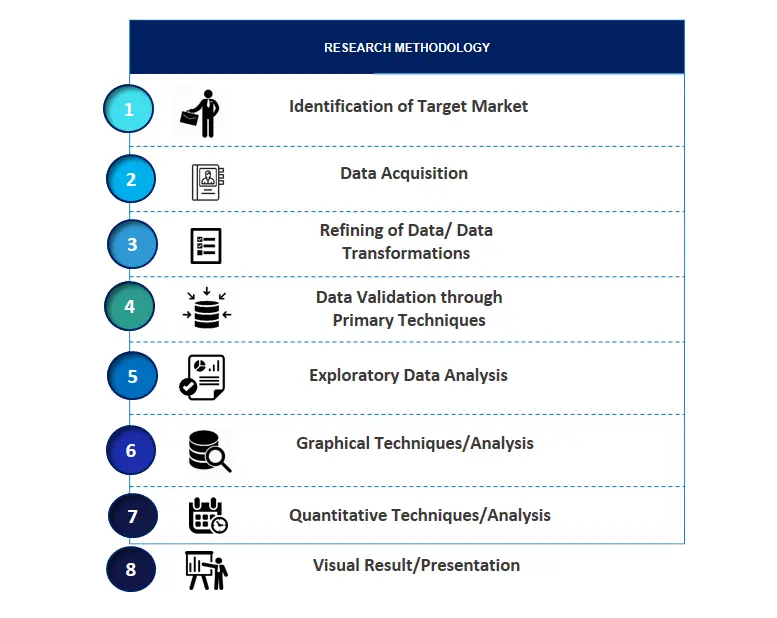
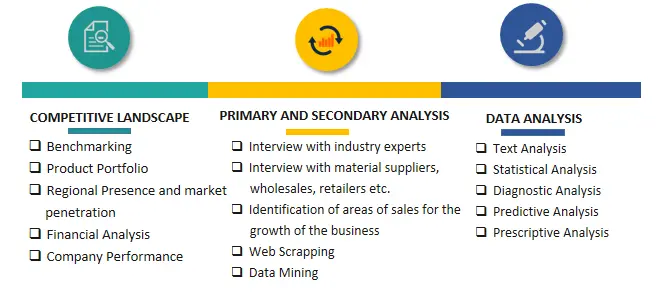
SPER Market Research’s methodology uses great emphasis on primary research to ensure that the market intelligence insights are up to date, reliable and accurate. Primary interviews are done with players involved in each phase of a supply chain to analyze the market forecasting. The secondary research method is used to help you fully understand how the future markets and the spending patterns look likes.
The report is based on in-depth qualitative and quantitative analysis of the Product Market. The quantitative analysis involves the application of various projection and sampling techniques. The qualitative analysis involves primary interviews, surveys, and vendor briefings. The data gathered as a result of these processes are validated through experts opinion. Our research methodology entails an ideal mixture of primary and secondary initiatives.